

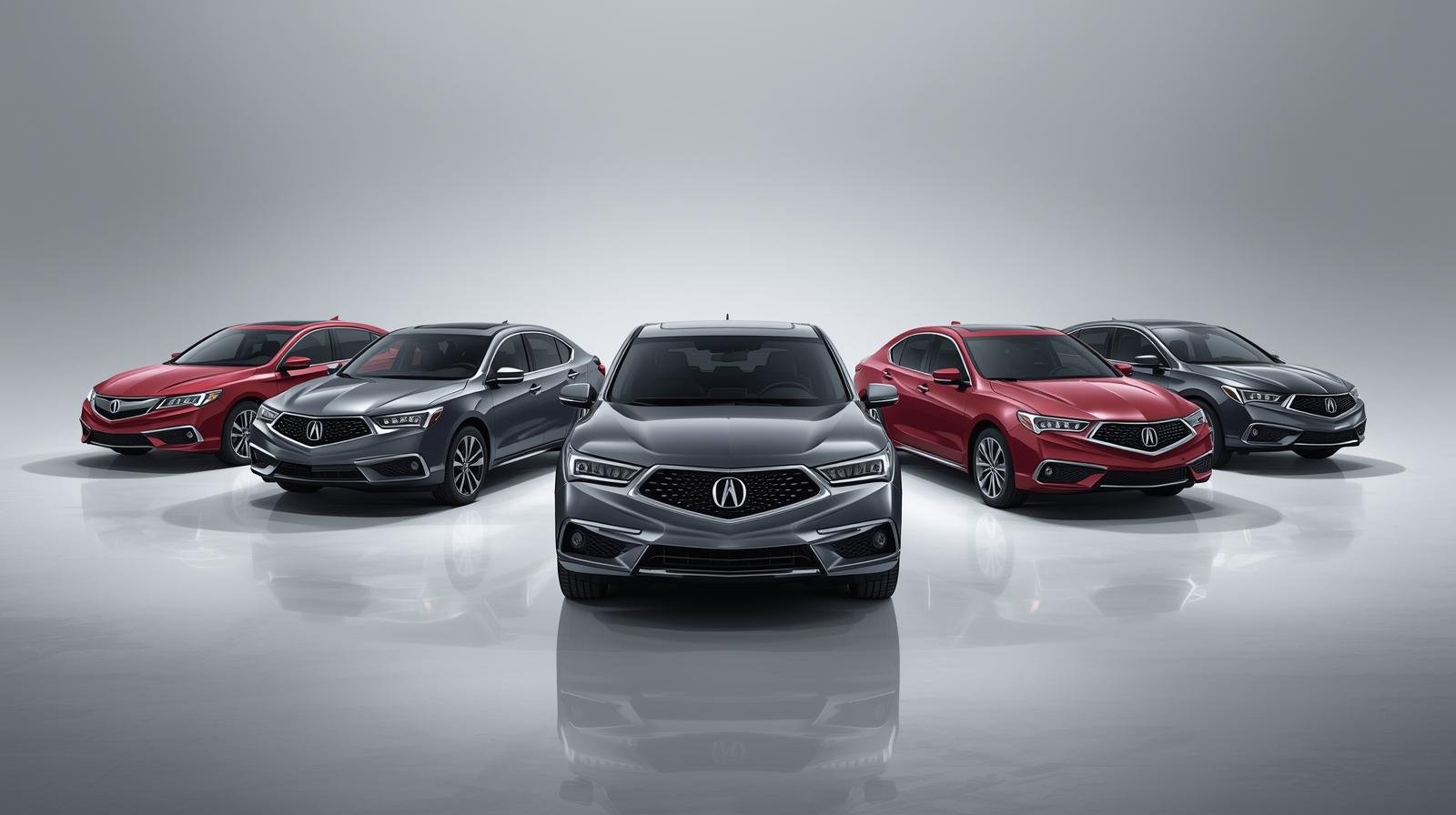
When Acura rolled out its 2017 model year vehicles, the brand was in the midst of a significant transformation. Honda’s luxury division wasn’t just tweaking designs—they were reimagining what it meant to deliver “Precision Crafted Performance.” From practical family SUVs to a jaw-dropping supercar, the 2017 lineup represented Acura’s commitment to blending reliability with genuine driving excitement.
Let’s explore what made these vehicles noteworthy and whether they still deserve your attention today.
why to buy acura 2017: Understanding Acura’s 2017 Strategy
By 2017, Acura had faced its share of criticism. Some automotive journalists questioned whether the brand had lost its edge, particularly when compared to German luxury competitors. The company responded not with excuses, but with metal and engineering. According to automotive sales data from that period, Acura sold over 156,000 vehicles in the United States during 2017, demonstrating that buyers were responding positively to the brand’s direction.
The lineup featured something for nearly everyone: compact luxury crossovers, midsize sedans, and an exotic halo car that turned heads at every intersection. Each vehicle served a distinct purpose in Acura’s portfolio, and understanding these differences helps explain why certain models became more popular than others.
why to buy acura 2017: The 2017 Acura RDX: The Practical Performer
The 2017 Acura RDX represented the brand’s best-selling vehicle that year, and for good reason. This compact luxury crossover hit a sweet spot that many competitors struggled to achieve—it felt premium without being pretentious, sporty without sacrificing practicality.
Under the hood sat a 3.5-liter V6 engine producing 279 horsepower, which was genuinely competitive in its class. Unlike some turbocharged competitors that felt laggy at low speeds, the RDX delivered immediate throttle response. Paired with Acura’s available Super Handling All-Wheel Drive (SH-AWD), this crossover handled twisty roads better than most buyers expected from a family hauler.
Inside, the RDX provided 76.9 cubic feet of cargo space with the rear seats folded—enough for weekend adventures or IKEA runs. The interior materials felt upscale, though some reviewers noted that certain plastic trim pieces didn’t quite match German standards. Still, features like dual-zone climate control, a power moonroof, and an eight-speaker audio system came standard, making it well-equipped at its approximately $36,000 starting price.
Consumer Reports gave the 2017 RDX high marks for predicted reliability, which mattered enormously to buyers choosing between it and less dependable European alternatives. If you’re shopping for one today, expect to find well-maintained examples with reasonable mileage, as many original owners treated these vehicles carefully.
The 2017 Acura TLX: Sedan Sophistication Meets Real Performance
Sedans faced growing challenges in 2017 as crossover mania intensified, but the 2017 Acura TLX made a compelling argument for traditional four-door elegance. Available in both four-cylinder and V6 variants, the TLX targeted buyers who wanted engaging dynamics without the harshness some sport sedans delivered.
The base 2.4-liter four-cylinder produced 206 horsepower—adequate but not thrilling. Most enthusiasts gravitated toward the 3.5-liter V6 model with 290 horsepower, especially when optioned with SH-AWD. This combination transformed the TLX from a comfortable commuter into something genuinely enjoyable on back roads. The torque-vectoring AWD system could send up to 70% of power to the rear wheels and actively distribute it side-to-side, reducing understeer and sharpening cornering behavior.
Technology-wise, the TLX featured Acura’s dual-screen infotainment system, which… well, let’s be honest—it frustrated many users. The upper screen handled navigation while the lower touchscreen managed audio and climate functions. In theory, this separation made sense. In practice, many drivers found it unnecessarily complicated compared to single-screen systems from competitors. This represented one area where Acura’s engineers perhaps overthought the problem.
Safety features impressed more consistently. The TLX could be equipped with AcuraWatch, a suite including adaptive cruise control, lane keeping assist, and collision mitigation braking. These features were becoming increasingly common across the industry, but Acura deserved credit for making them accessible rather than reserving them for top-tier trims.
Pricing started around $32,000 for base models, climbing past $45,000 for fully-loaded V6 SH-AWD versions. That pricing positioned it competitively against the Audi A4, BMW 3 Series, and Mercedes-Benz C-Class, though the Acura’s value proposition centered more on equipment and reliability than prestige badging.
The 2017 Acura NSX: Supercar Ambitions Realized
Then there was the 2017 Acura NSX—the vehicle that reminded everyone that Acura could still build something extraordinary. After years of development delays and concept revisions, the second-generation NSX finally reached customers in 2016 as a 2017 model year vehicle, representing Acura’s technological flagship.
This wasn’t your grandfather’s NSX. While the original 1990s model charmed drivers with naturally aspirated simplicity, the new NSX embraced complexity with almost reckless abandon. Three electric motors combined with a twin-turbocharged 3.5-liter V6 to produce a combined 573 horsepower. The front wheels received power from two independent electric motors, while the rear wheels got power from the combustion engine and a third motor, creating a sophisticated all-wheel-drive system.
The result? Zero to 60 mph happened in approximately 2.9 seconds, according to multiple automotive publications. Top speed reached 191 mph. These weren’t just impressive numbers—they represented genuine supercar performance that could embarrass vehicles costing twice as much.
Production took place at Honda’s Performance Manufacturing Center in Marysville, Ohio, where skilled technicians hand-assembled each NSX. This American manufacturing story resonated with some buyers, though it also raised eyebrows among purists who remembered the original’s Japanese heritage.
At roughly $157,000, the NSX cost significantly less than Ferrari or McLaren alternatives, yet it wasn’t exactly flying off dealer lots. Acura sold just 581 NSX models in 2017, according to industry sales figures. Part of this reflected production constraints, but it also highlighted a marketing challenge—convincing buyers to spend supercar money on an Acura badge remained difficult, regardless of the engineering excellence underneath.
The 2017 Acura MDX: Three-Row Luxury Without the Drama
While not always highlighted alongside its siblings, the 2017 Acura MDX deserves mention as one of the brand’s most important vehicles. This three-row SUV underwent a refresh for 2017, receiving updated styling, improved sound insulation, and enhanced safety technology.
Read more: https://nagarreporter.com/top-business-budget-ideas-in-the-usa/
The MDX shared its powertrain with the RDX—the same 3.5-liter V6 with 290 horsepower—but directed that power through a nine-speed automatic transmission. Front-wheel drive came standard, though most buyers opted for SH-AWD to maximize capability in varied conditions.
What made the MDX special wasn’t flashy performance or cutting-edge styling. Instead, it excelled at the fundamentals: seating seven passengers comfortably, providing adequate cargo space, and delivering Honda-level reliability in a premium package. Families appreciated features like conversation mirrors for monitoring back-seat passengers and built-in window shades for sun protection.
Should You Consider a 2017 Acura Today?
Shopping for used 2017 Acura models in 2026 means evaluating vehicles approaching their tenth year. Here’s the practical reality: these cars have held up well compared to many luxury competitors. Honda’s reputation for reliability transfers to Acura, and most mechanical components prove durable with proper maintenance.
The RDX and TLX represent particularly smart used purchases if you find well-maintained examples with documented service records. These vehicles depreciated significantly from their original prices, making them accessible for budget-conscious buyers seeking luxury features without luxury repair costs. Common issues remain relatively minor—the dual-screen infotainment system still frustrates, and some owners report premature brake wear—but major mechanical failures remain uncommon.
The NSX occupies a different category entirely. These rare supercars appeal to collectors and enthusiasts rather than practical shoppers, and values have begun stabilizing or even appreciating for pristine examples.
The Bottom Line
Acura’s 2017 lineup represented an important chapter in the brand’s evolution. The company delivered vehicles that combined genuine performance with practical luxury, all backed by Honda’s engineering credibility. While they didn’t revolutionize their segments or outsell established German rivals, they offered compelling alternatives for buyers who valued substance over badge prestige.
Whether you’re researching these vehicles as potential purchases or simply curious about automotive history, the 2017 Acura models demonstrate that excellent cars don’t always come from the most obvious sources. Sometimes the best choice wears an unexpected badge.

